

Introduction: Why Picking the Right EV Charger Matters in India
Electric vehicles (EVs) are becoming more common on Indian roads, and more people now want to charge their cars at home. But many new EV owners have one big question: how to choose the right home EV charger for their daily needs. Since home charging is cheaper, safer, and more convenient, choosing the right setup matters a lot.
This guide will explain in simple language how to choose the right home EV charger in India, what features to compare, the installation process, safety requirements, and how to future-proof your charger for upcoming EV models. Whether you drive a Tata Nexon EV, MG ZS EV, Mahindra XUV400, or any other car, learning how to choose the right home EV charger will help you save money, charge faster, and avoid mistakes.
Let’s start by understanding the basics.

1. Understanding Home Charging: The First Step in How to Choose the Right Home EV Charger
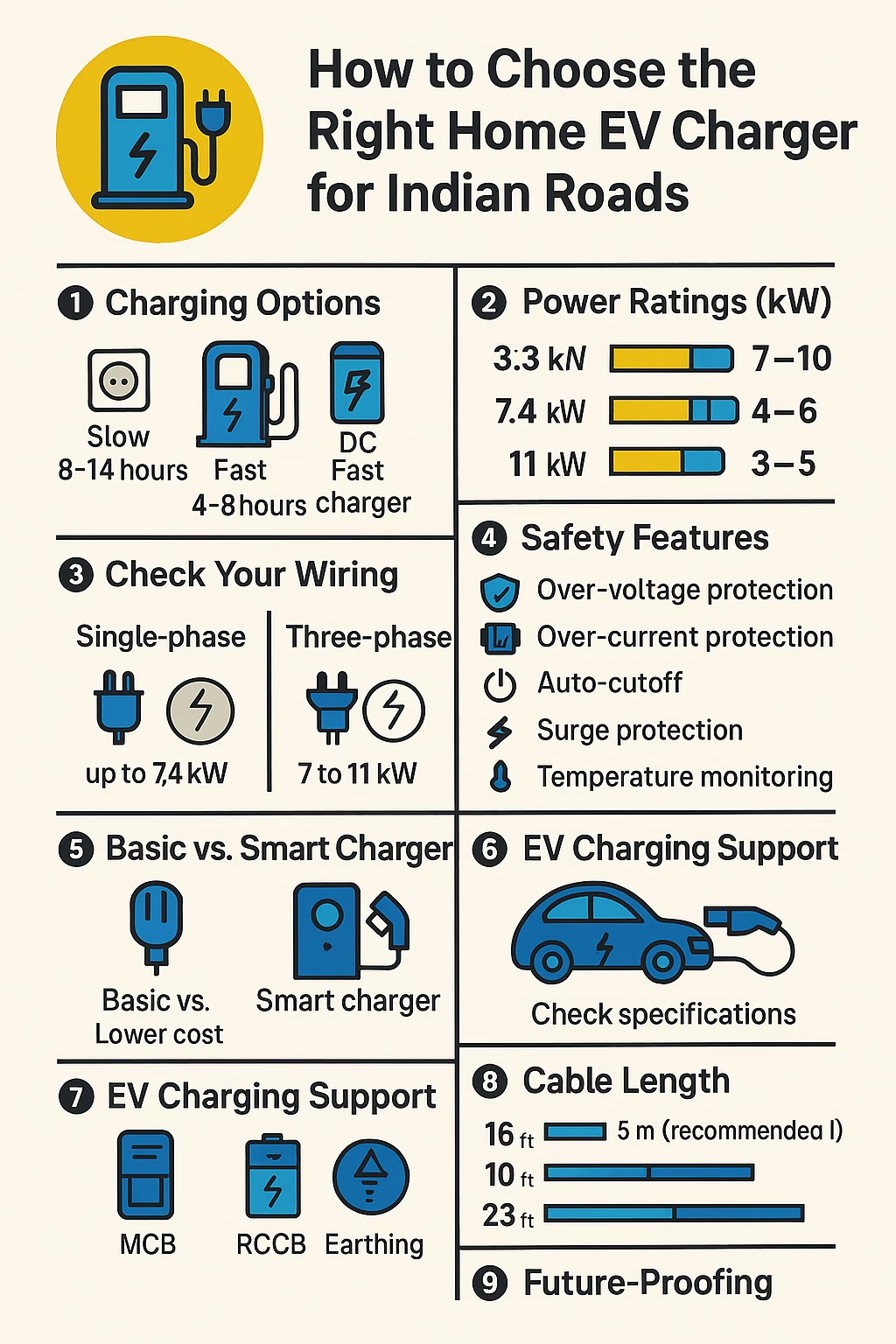
Before you understand how to choose the right home EV charger, you must understand the three types of home charging options available in India:
1.1 Type 1: Standard 15A Home Socket (Slow Charging)
- Charging speed: 8–14 hours
- Best for users with small daily runs
- Safe only if your home wiring is strong
- Minimal cost, but very slow
While it’s the cheapest option, it’s not ideal for long-term use. It also gets hot and isn’t the safest.
This is why many people searching for how to choose the right home EV charger eventually shift to proper wall chargers.
1.2 Type 2: AC Wall Mounted Charger (Fast & Recommended)
- Charging speed: 4–8 hours
- Comes with most EVs
- Requires professional installation
- Best for daily home use
If you want to truly know how to choose the right home EV charger, this is the category you must focus on.
1.3 Type 3: DC Home Charger (Very Rare in India)
- Ultra-fast charging in 1–2 hours
- Very expensive
- High power demand
- Only suitable for commercial or apartment complexes
Most Indian homes are not equipped to use DC home chargers.
2. Power Ratings Explained: The Heart of How to Choose the Right Home EV Charger
If you’re trying to understand how to choose the right home EV charger, you must understand charger power ratings.
Power is measured in kW (kilowatts). Popular home chargers in India include:
- 3.3 kW (Standard)
- 7.4 kW (Fast)
- 11 kW (Very fast, requires 3-phase supply)
Which Power Rating Should You Choose?
To know how to choose the right home EV charger based on speed:
| Charger Type | Home Power Requirement | Charging Speed | Best For |
|---|---|---|---|
| 3.3 kW | Single-phase | 7–10 hours | Most EV owners |
| 7.4 kW | Single/Three-phase | 4–6 hours | Faster daily usage |
| 11 kW | Three-phase only | 3–5 hours | Heavy users, fleets |
For most Indian homes, 3.3 kW or 7.4 kW is perfect.
3. How to Determine the Right Charger for Your EV Model
Another part of understanding how to choose the right home EV charger is matching it with your EV battery capacity.
Battery Size Examples (2025)
- Tata Tiago EV: 24 kWh
- Tata Nexon EV LR: 40.5 kWh
- MG ZS EV: 50.3 kWh
- Hyundai Kona: 39.2 kWh
- Mahindra XUV400: 39.4 kWh
Simple Rule:
Bigger battery = Higher power charger needed
So, learning how to choose the right home EV charger for your specific vehicle is crucial.
4. Single-Phase vs. Three-Phase: A Big Factor in Choosing a Home EV Charger
Whether you have single-phase or three-phase wiring changes your options.
If you’re wondering how to choose the right home EV charger, check your home power connection first:
✔ Single-phase homes
- Support 3.3 kW chargers easily
- May support 7.4 kW with upgrades
- Lower cost
✔ Three-phase homes
- Support all chargers including 7.4 kW & 11 kW
- Future-proof
- Higher installation flexibility
Your home’s electric load decides how to choose the right home EV charger that works safely without tripping the power.

5. Safety Features: Most Important Part of How to Choose the Right Home EV Charger
Indian homes often have wiring issues, voltage fluctuations, and heat problems. So, when learning how to choose the right home EV charger, you must check for essential safety features:
✔ Over-voltage protection
Prevents damage during voltage spikes.
✔ Over-current protection
Stops excess current flow.
✔ Auto-cutoff
Charger automatically turns off when the battery is full.
✔ Surge protection
Protects EV and charger during lightning or grid fluctuations.
✔ Temperature monitoring
Prevents overheating — critical in Indian summers.
✔ Earthing requirement
Check if your home has proper grounding.
These safety features are non-negotiable when asking how to choose the right home EV charger that lasts long.
6. Smart Chargers vs. Basic Chargers: Which Should You Pick?
To know how to choose the right home EV charger, you should compare smart chargers and basic chargers.
6.1 Basic Chargers (Affordable, Simple)
- No app
- No Wi-Fi
- Manual usage
- Lower cost (₹20,000–₹35,000)
Perfect for users who want simplicity.
6.2 Smart Chargers (Feature-rich, Future-friendly)
These offer:
- App-based control
- Remote ON/OFF
- Charging schedule
- Energy tracking
- Solar charging integration
- Voice assistant compatibility
Cost: ₹45,000–₹85,000
Smart chargers are ideal for those who want to optimize charging costs and learn how to choose the right home EV charger with automation and smart features.
RELATED: Charge EV in 5 Minutes in India – The Future of Fast Charging
7. Does Your EV Support Faster AC Charging?
Many new EV buyers don’t know this, but not all cars support high AC charging speeds. This affects how to choose the right home EV charger.
Example:
- Tata Nexon EV supports only 3.3 kW AC
- MG ZS EV supports 7.4 kW AC
- BYD vehicles support 11 kW AC
So, buying a 7.4 kW charger for a Nexon EV won’t make charging faster.
This point is extremely important for anyone learning how to choose the right home EV charger efficiently.
8. Installation Checklist: Practical Part of How to Choose the Right Home EV Charger
Here’s what you need before installation:
✔ MCB (Miniature Circuit Breaker)
Stops overloads.
✔ RCCB (Residual Current Circuit Breaker)
Prevents electric shock.
✔ Proper earthing
Critical for safety.
✔ 6 sq mm wiring (minimum)
Handles the load safely.
✔ Weather-proof box (if outside)
Protects charger from rain.
If you skip these steps, even the best charger won’t work well. This is why installation is a core factor in how to choose the right home EV charger.
9. Charging Cable Length: A Small but Important Selection Point
Don’t ignore cable length when learning how to choose the right home EV charger.
Common lengths:
- 3 meters
- 5 meters (recommended)
- 7 meters for flexible parking
Choose based on:
- Where you park
- Socket position
- Space around the car
10. Cost Breakdown: Total Price of Home EV Charger in India
To understand how to choose the right home EV charger, you must know the actual cost involved.
✔ Charger price:
₹20,000 – ₹85,000 (depending on type)
✔ Installation cost:
₹3,000 – ₹12,000
✔ Wiring & accessories:
₹1,500 – ₹6,000
✔ Total cost:
₹25,000 – ₹1,00,000
11. Solar Charging Option: Future Trend in Home EV Chargers
India is moving toward solar-powered homes. If you wish to know how to choose the right home EV charger for the long run, check if your charger supports:
- Solar charging
- Dynamic load balancing
- Smart energy routing
This reduces electricity bills and increases eco-friendliness.
12. Government Rules & Building Guidelines
Before installation, check:
- DISCOM (electricity board) rules
- Apartment association approval
- Load upgrade requirements
This regulatory step is part of understanding how to choose the right home EV charger legally and safely.
13. Future-Proofing: Buy with Tomorrow in Mind
The EV ecosystem is evolving fast. When learning how to choose the right home EV charger, think long-term.
Choose a charger that:
✔ Supports smart features
✔ Has upgrade options
✔ Works with future EVs
✔ Has strong warranty support
A future-proof charger saves money down the line.
14. Comparison: Best Home EV Chargers in India (2025)
✔ Tata Power EZ Charger
Reliable, company-backed.
✔ Ather Grid Charger (HomePod)
Smart features, app control.
✔ Statiq Home Charger
Advanced safety features.
✔ Delta AC Charger
International quality.
✔ ABB Home Charger
Premium and durable.
These examples help you understand how to choose the right home EV charger from trusted brands.
Conclusion: Final Checklist on How to Choose the Right Home EV Charger
Here is your ultimate checklist summarizing how to choose the right home EV charger:
✔ Match charger power (kW) with your EV
✔ Check home wiring & load capacity
✔ Ensure safety features: RCCB, MCB, surge protection
✔ Choose smart or basic based on your needs
✔ Select proper cable length
✔ Choose a brand with warranty & support
✔ Verify installation requirements
✔ Future-proof your choice
By following this guide, anyone in India can easily understand how to choose the right home EV charger confidently and safely, without confusion.