

Introduction
The crypto world is booming with innovation — but it’s also overflowing with scams. Every year, thousands of investors lose money to fraudulent tokens, rug pulls, and fake blockchain startups that vanish overnight.
If you’ve ever wondered how to spot a fake crypto project before it’s too late, you’re already taking the most important step: protecting yourself. In this guide, we’ll break down exactly how to spot a fake crypto project, understand how scammers operate, and learn how to identify genuine projects in a world full of hype.
Whether you’re a beginner or an experienced investor, this is your roadmap to avoid crypto traps and make smarter, safer decisions.

🚨 Why Fake Crypto Projects Are So Common
Before learning how to spot a fake crypto project, let’s understand why scams exist in the first place.
Crypto markets are largely unregulated, fast-moving, and global — that makes them a magnet for scammers. Unlike traditional finance, there’s no central authority to reverse transactions or protect your funds if you get duped.
Scammers exploit two powerful emotions:
- Greed: “This coin will 100x!”
- FOMO (Fear of Missing Out): “If you don’t buy now, you’ll regret it later!”
These emotions cloud judgment and make people ignore red flags. So, the real secret behind how to spot a fake crypto project lies in keeping emotions in check and doing structured due diligence.
💡 Step-by-Step Guide: How to Spot a Fake Crypto Project
Let’s go through the most common red flags that reveal a scam, along with smart tips to detect them early.
1. Check the Team Behind the Project
One of the first ways in how to spot a fake crypto project is by verifying the team.
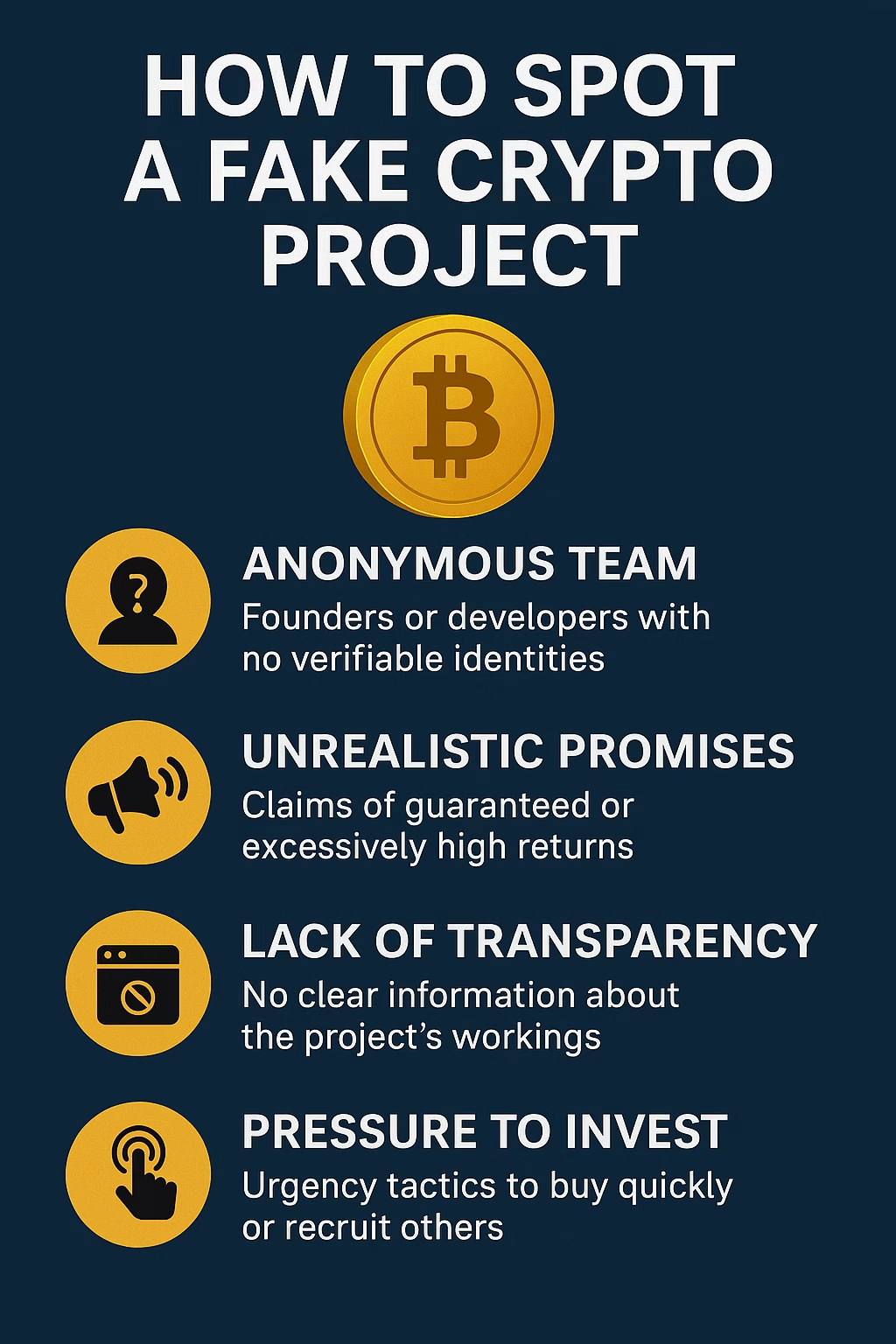
A legitimate crypto project is built by real people with a track record — developers, advisors, or founders with verifiable social profiles. Scammers, on the other hand, often use:
- Fake names or stock photos as “team members”
- LinkedIn profiles with no real activity or fake endorsements
- Zero verifiable experience in blockchain
How to verify:
- Google each team member’s name.
- Check LinkedIn for mutual connections and previous jobs.
- Search Twitter and GitHub for real posts or contributions.
If you can’t find reliable evidence of the team’s credibility, that’s your first red flag. In short, how to spot a fake crypto project often starts with “who’s behind it.”
2. Analyze the Whitepaper Carefully
The whitepaper is the backbone of any crypto project. It explains the project’s goals, technology, and vision. But many scams copy-paste whitepapers from other projects or fill them with jargon to look “technical.”
Here’s how to spot a fake crypto project through its whitepaper:
- Overpromising claims: “Guaranteed 500% ROI” or “risk-free profits.”
- No clear problem or solution: If you can’t understand what real-world issue it solves, it’s likely nonsense.
- Grammatical errors or generic text: Often copied from elsewhere.
- Missing tokenomics: Legit projects clearly describe token supply, allocation, and use cases.
A good rule: if the whitepaper sounds too good to be true, it probably is.
3. Research the Tokenomics
Another crucial step in how to spot a fake crypto project is checking tokenomics — the economics of the token.
Fraudulent projects often manipulate token distribution to benefit insiders:
- Huge percentage held by founders or team: (e.g., 60%+) means they can dump tokens later.
- No lock-up or vesting period: Suggests founders can sell anytime.
- Unclear utility: If the token’s only purpose is “to make money,” it’s likely a scam.
Always ask: What is this token used for? Real projects have practical use cases — governance, staking, utility — not just “trading.”
4. Check for a Working Product or MVP
A big sign of legitimacy is a working product. Many fake projects have slick websites but no actual tech behind them.
How to spot a fake crypto project here:
- Visit the official site and check if they have a working app, beta version, or GitHub repository.
- Read user feedback on forums like Reddit, Bitcointalk, or X (Twitter).
- See if the code is open source (many genuine blockchain projects are).
If all you see are flashy graphics and promises, but no product — run.

5. Examine the Website and Social Media
The website and social presence can reveal a lot about credibility.
Fake projects often use copied templates, grammatical errors, or exaggerated visuals. They also inflate follower counts on Twitter or Telegram using bots.
To practice how to spot a fake crypto project online:
- Check their domain history (on Whois). Recently created domains = red flag.
- Analyze engagement. Thousands of followers but no real comments = fake.
- Beware of aggressive marketing and giveaways — real projects don’t beg for investors.
6. Look for Smart Contract Transparency
If a project involves tokens, it must have a smart contract. Legit contracts are usually verified on public blockchains like Etherscan or BSCScan.
A major part of how to spot a fake crypto project is checking whether the smart contract is:
- Verified publicly (anyone can view the code)
- Audited by a reputable firm (e.g., CertiK, PeckShield, Hacken)
- Free from suspicious code (like functions that let the creator withdraw all funds)
If the contract is hidden, unaudited, or written by an anonymous dev, that’s a deal breaker.
7. Beware of Unrealistic Promises
This is the oldest trick in the book.
If someone says:
“This coin will give you 20x in a week!”
“Guaranteed passive income forever!”
That’s not an opportunity — that’s a scam.
A genuine project never guarantees profit. The entire crypto market is volatile and no outcome can ever be assured. Recognizing this truth is central to learning how to spot a fake crypto project.
8. Investigate the Roadmap
Every legitimate project should have a transparent roadmap — a clear timeline of milestones, goals, and product development.
Fake projects often publish vague roadmaps like “Q1: Token launch, Q2: Marketing campaign” with no technical goals or progress updates.
In learning how to spot a fake crypto project, check if:
- They actually meet roadmap targets.
- Updates are frequent and transparent.
- The goals sound realistic, not magical.
If the project has missed every deadline without explanation, it’s time to move on.
9. Watch Out for Fake Partnerships and Endorsements
Many scams claim partnerships with big names like Binance, Coinbase, or Tesla. But when you visit the partner’s official website, there’s no mention at all.
One of the easiest tricks in how to spot a fake crypto project is verifying claims. Always cross-check partnerships or influencer endorsements from official channels.
If Elon Musk didn’t tweet it, don’t trust a random Telegram admin saying he did.
10. Community Behavior Tells the Truth
Scammers often build toxic communities full of bots or admins who delete tough questions.
To practice how to spot a fake crypto project, join their Telegram, Discord, or Reddit. Ask a few critical questions like:
- “Is the smart contract audited?”
- “Can you share token allocation details?”
If moderators ban you or avoid specifics, that’s a major red flag. Real communities welcome tough questions.
11. Watch for Fake Airdrops and Giveaways
Fake crypto projects often start with “free token airdrops” to lure users. They’ll ask you to connect your wallet or pay small fees — and that’s when the scam happens.
Always remember, how to spot a fake crypto project involves skepticism toward anything that sounds “free but urgent.” Never share private keys or seed phrases. No legitimate project will ever ask for them.
12. Check Audit Reports and GitHub Activity
A project with zero development activity is a red flag.
To strengthen your skill in how to spot a fake crypto project, visit their GitHub:
- Are developers regularly updating code?
- Do commits (updates) look genuine?
- Is there community collaboration?
Also, look for third-party audits — even smaller audits add credibility.
RELATED: How Blockchain Gaming Tokens Are Beating Meme Coins in 2025
13. Follow the Money Trail
Many scams collect funds through pre-sales, ICOs, or liquidity pools. If they don’t clearly explain where the money goes, beware.
How to spot a fake crypto project financially:
- Check wallet transparency — many legit projects share treasury addresses.
- Avoid anonymous fundraisers with no escrow or smart contract control.
- See if founders are willing to “doxx” (reveal their identity) — anonymity without accountability is risky.
14. Regulatory Awareness
Real projects follow some basic legal standards. If a project says “no KYC needed,” “registered offshore,” or “not subject to any laws,” it’s a warning.
Part of how to spot a fake crypto project is identifying whether it complies with basic regulations — even decentralized projects should have terms and responsible disclosures.
15. Learn from Past Scams
Here are a few famous cases every investor should know:
- BitConnect (2016–2018): A Ponzi disguised as a lending platform.
- OneCoin: A fake blockchain — it didn’t even have a ledger.
- Squid Game Token (2021): Used the popular TV show’s name and rug-pulled millions.
Studying these helps you recognize patterns and refine your instinct on how to spot a fake crypto project quickly.
✅ Signs of a Genuine Crypto Project
Now that we’ve covered how to spot a fake crypto project, here’s what authentic ones usually have:
- Transparent, known founders
- Public, audited smart contract
- Real use case or innovation
- Active community and real discussions
- Steady, realistic roadmap updates
- Partnerships verified by both sides
- Reasonable, no-hype communication
When you see these, you’re likely in safe hands.
🔒 Final Thoughts
Scams will always evolve, but the fundamentals of safety never change.
Knowing how to spot a fake crypto project is not about fear — it’s about awareness.
Before investing in any token, ask yourself:
- Do I understand what this project really does?
- Are the people behind it credible?
- Does it solve a real problem?
If your gut says something feels off, step back. In crypto, doing nothing is sometimes the smartest investment.
Remember: protecting your money begins with protecting your attention. And the better you get at understanding how to spot a fake crypto project, the safer, smarter, and more profitable your crypto journey becomes.