

Introduction: Why You Need to Know This Before Elections
Every election season, your phone suddenly fills with political ads, your social media timeline changes, and you begin seeing messages perfectly aligned with your fears, hopes, emotions, or even personal problems. But have you ever wondered how political ads use your data to influence what you see?
The truth is simple: modern political campaigns don’t rely only on rallies and speeches—they rely heavily on your personal data. Understanding how political ads use your data is important because these ads often shape opinions silently, without you realizing how or why you’re being targeted.
This article explains in simple language how political ads use your data, what techniques political parties use, how data brokers work, how social media platforms fuel targeted ads, and what you should do to protect yourself before the next elections.
Let’s break it down step-by-step.

1. Why Political Parties Want Your Data
The first step in understanding how political ads use your data is understanding why political campaigns care so much about personal information.
Political parties want your data because it helps them:
- Predict your voting behavior
- Understand your interests and fears
- Target you with tailored messages
- Influence undecided voters
- Increase the chances of converting non-voters into voters
With enough data, parties can guess:
- Your preferred political ideology
- Your caste, religion, and community
- Your income level
- Your education background
- Your economic worries
- Your location
- Your age group
- Whether you have children
- Your lifestyle habits
- Your online behavior
This is the foundation of how political ads use your data to shape your decisions during elections.
2. How Political Parties Collect Your Data
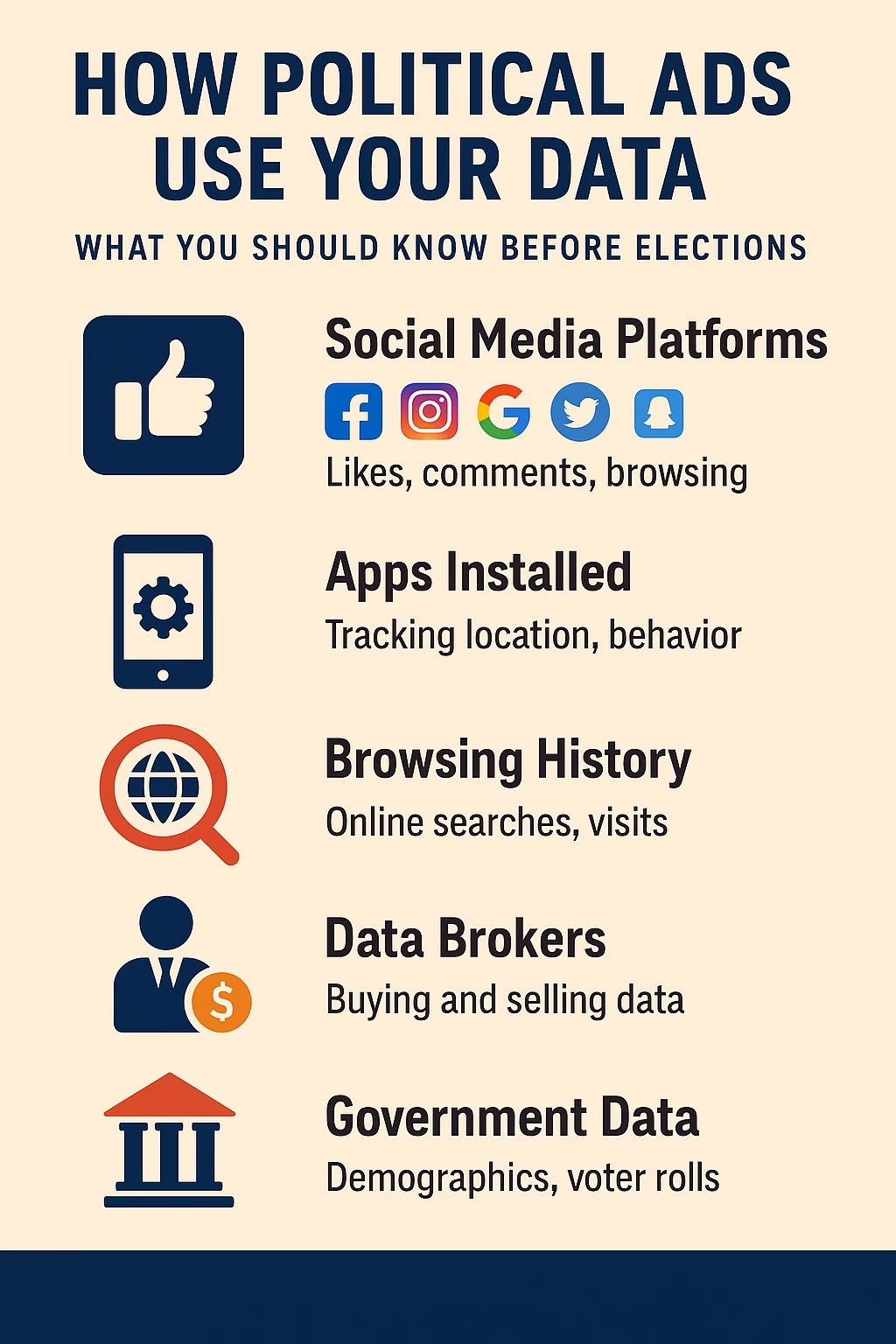
To really understand how political ads use your data, you must see how political parties gather data. There are five major sources.
2.1 Social Media Platforms
Platforms like:
- YouTube
- Twitter (X)
- Snapchat
collect your:
- Likes
- Comments
- Shares
- Search history
- Watch time
- Followers
- Location (IP/GPS)
- Demographics
Political advertisers use this data to create extremely specific audience groups.
This is one of the main ways how political ads use your data to target you with customized messages.
2.2 Your Phone Number & WhatsApp Behavior
If you’ve ever:
- Filled out a political survey
- Attended a political rally
- Donated online
- Signed up for a government scheme
- Shared your number with any app
your number may end up in a political data list.
WhatsApp groups, call records, time spent online, and message patterns allow political campaigns to understand your behavior. This provides insight into how political ads use your data even on private messaging platforms.
2.3 Apps Installed on Your Phone
Many popular apps track:
- Your location
- Your contacts
- Your usage patterns
- Your device ID
- Your browsing activities
These apps often sell the data to data brokers, who then sell it to political campaigns.
This indirect path is one of the least-known methods of how political ads use your data.
2.4 Online Shopping & Browsing History
Your shopping behavior says a lot:
- Buying baby products? → You may care about family welfare schemes
- Buying farming tools? → You may be targeted with farmer-related promises
- Searching for job opportunities? → Expect employment-related ads
- Watching news videos? → You may get issue-based political ads
This is the behavioral psychology behind how political ads use your data.
RELATED: GST 2.0 in India 2025 – Everything You Need to Know
2.5 Government Data (Indirect or Public)
Some government data is publicly accessible, such as:
- Electoral rolls
- Demographic statistics
- Locality-wise voter behavior
- Age group & gender data
- Regional population trends
Political consultancies merge this with private data. Combined together, this creates an extremely powerful profile and explains how political ads use your data on a massive scale.
3. Micro-Targeting: The Heart of Political Advertising
The most important concept in how political ads use your data is micro-targeting.
Micro-targeting means sending different political messages to different groups of people, based on their behavior and psychology.
Example:
- Young voters see messages about jobs and technology.
- Middle-aged voters see messages about economy, development, and stability.
- Farmers see agricultural schemes.
- Women may see ads about safety and education.
- Students see scholarship or employment ads.
This customized method is entirely dependent on how political ads use your data to categorize voters into very specific groups (sometimes as small as 100–500 people).
4. Emotional Targeting and Psychological Manipulation
One of the most serious aspects of how political ads use your data is emotional manipulation.
Your data tells them:
- What you fear
- What angers you
- What inspires you
- What problems you face
- What you believe in
Political ads then use emotional triggers such as:
- Fear (“opponent will destroy X”)
- Hope (“we will provide Y”)
- Pride (“our party supports your community”)
- Anger (“look what the others are doing”)
- Insecurity (“you may lose your benefits”)
This psychological profiling is a key factor in how political ads use your data to influence your voting choices subtly.
5. Not All Ads Are the Same: Types of Political Targeting
Understanding how political ads use your data means understanding the types of ads you may see.
5.1 Issue-Based Ads
Ads focused on problems:
- Unemployment
- Healthcare
- Inflation
- Corruption
- Safety
These appear based on your browsing and search behavior.
5.2 Community-Based Ads
Ads targeting your community or identity:
- Religion
- Caste
- Language
- Region
- Locality
This information often comes from voter data and demographic databases. This is a sensitive but widely practiced method in how political ads use your data.
5.3 Personalized Video Ads
AI-generated or highly customized ads targeted at:
- Specific age groups
- People with certain interests
- People who follow particular pages or influencers
This is a modern example of how political ads use your data with advanced machine learning.
5.4 Negative Ads & Fear Ads
If data shows you’re emotional about specific issues, political parties push negative ads to trigger a reaction:
- “Opposition will take away X”
- “Opposition will destroy Y”
This is one of the more controversial applications of how political ads use your data.
5.5 Location-Based Ads
If you live in a swing constituency or urban hotspot, you may see more political ads. Targeting is precise, and location-based segmentation explains another dimension of how political ads use your data.

6. The Hidden Industry: Data Brokers and Political Tech Firms
A major underestimated part of how political ads use your data is the role of data brokers.
These companies:
- Buy your data from apps
- Buy your data from websites
- Combine it with demographic data
- Build extremely detailed voter profiles
- Sell these to political parties
Political tech firms process:
- Personality analysis
- Sentiment analysis
- Issue prediction
- Voting probability score
This makes the entire ecosystem behind how political ads use your data much bigger than most people realize.
7. The Risks: Why You Should Care
Even if you don’t care about politics, here’s why you must understand how political ads use your data.
7.1 You Are Being Manipulated Without Knowing
Your news feed is filtered based on your psychological weaknesses.
7.2 You Get Only One Side of the Story
Micro-targeting prevents you from seeing diverse viewpoints.
7.3 Elections Can Be Influenced by Data Misuse
Incorrect or biased data can shape national outcomes.
7.4 Privacy Loss
Your information may be stored forever.
7.5 Social Polarization
Targeted ads can increase community tensions.
These consequences show how serious how political ads use your data can become when mixed with large-scale political influence.
8. How to Protect Yourself Before Elections
If you want control, here’s what you MUST do:
✔ Disable “Personalized Ads” in Facebook/Instagram/Google
This reduces how political ads use your data.
✔ Avoid sharing your number with political surveys
Many are disguised data-collection tools.
✔ Review app permissions
Apps may track contacts, location, and storage.
✔ Use a VPN or private browsers
Protects your browsing data.
✔ Don’t click suspicious links
These track your behavior immediately.
✔ Fact-check before reacting
Helps prevent emotional manipulation.
These steps won’t stop political targeting entirely, but they reduce how political ads use your data to control your feed.
9. Final Thoughts: Awareness Is Your Best Defense
In today’s digital age, elections are not won only on rallies or speeches—they’re won on data. The more political campaigns know about you, the easier it is for them to influence you.
This is why understanding how political ads use your data is not optional—it’s essential.
When you understand how political ads use your data, you become a smarter, more independent voter who makes decisions based on facts, not on emotional manipulation.
Stay informed. Stay alert. Stay critical.