

Electric Vehicles (EVs) are no longer the future — they’re the present. But one question still holds many people back from switching to EVs:
“How fast can I charge my EV?”
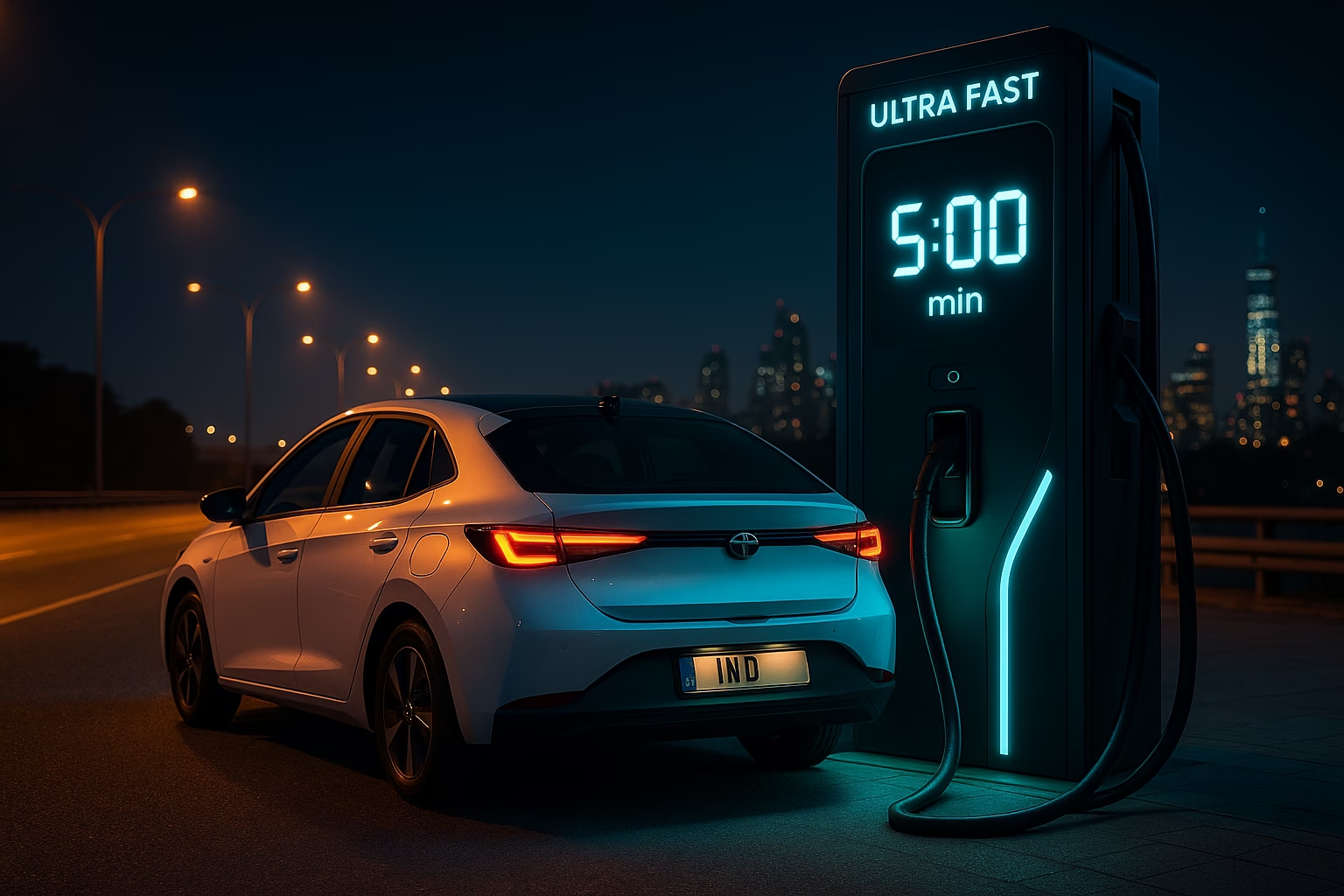
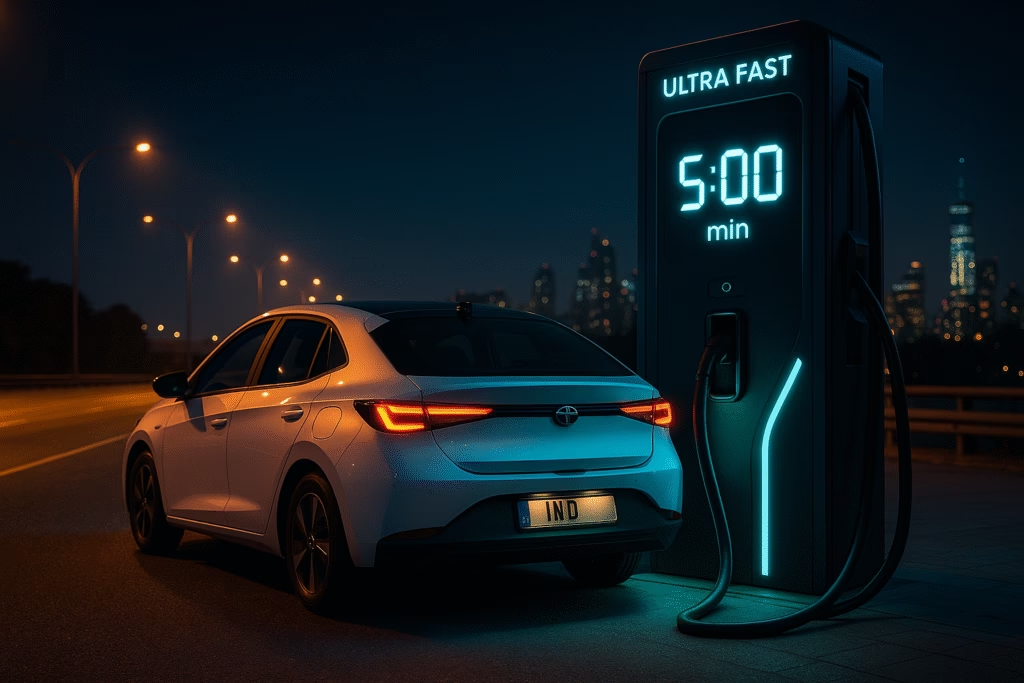
Imagine being able to charge EV in 5 minutes in India, just like filling up your petrol tank. Sounds like a dream, right? Well, that dream is getting closer to reality every single day.
In this detailed article, we’ll explore how India is preparing for 5-minute charging technology, which companies are leading the charge, how much it will cost, and what it means for the future of Indian mobility.
🚗 Why Fast Charging Matters So Much
For most drivers, the biggest hesitation about EVs is charging time. While petrol cars can refuel in under 5 minutes, charging an electric vehicle typically takes 30 minutes to several hours — depending on the charger.
That’s why the ability to charge EV in 5 minutes in India could completely transform how Indians think about electric mobility. It eliminates “range anxiety” — the fear of running out of charge — and makes EVs as convenient as traditional cars.
The idea isn’t just about speed; it’s about freedom. Freedom to drive long distances without worry, freedom to travel anywhere in India, and freedom from long charging queues.
⚡ What Does It Mean to Charge EV in 5 Minutes in India?
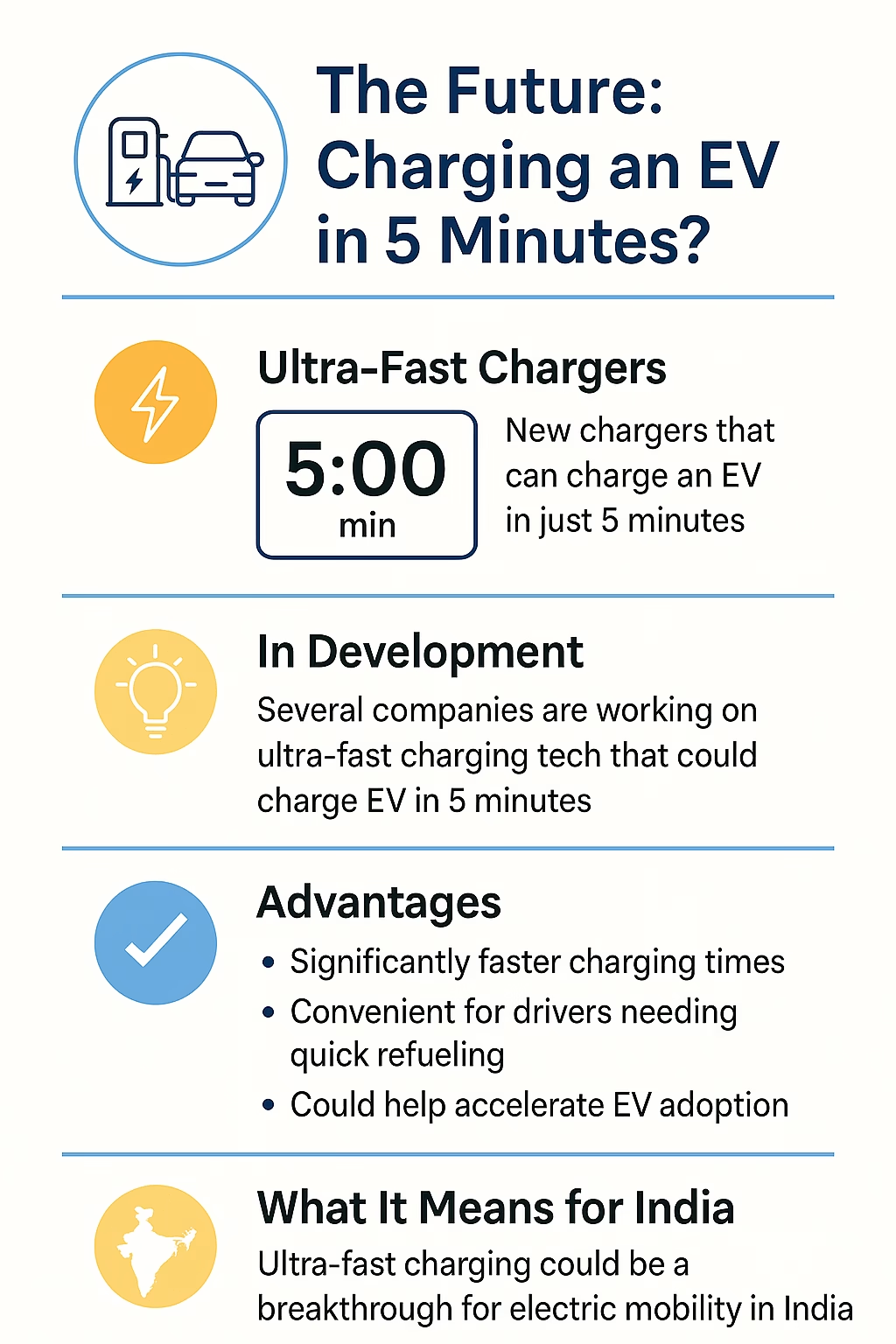
When we say charge EV in 5 minutes in India, it means reaching 80% battery charge in about 5 minutes using ultra-fast chargers (typically over 350–1000 kW).
This isn’t just plugging your car into a wall socket. It involves cutting-edge battery chemistry, advanced power electronics, and powerful charging infrastructure.
Think of it like supercharging on steroids — where electricity flows at lightning speed into your vehicle battery, safely and efficiently.
🔬 The Science Behind 5-Minute EV Charging
To charge EV in 5 minutes in India, we need more than just big chargers — the batteries themselves must evolve.
1. Advanced Battery Chemistry
Traditional lithium-ion batteries heat up quickly during fast charging. New materials like silicon anodes and graphene-based designs can handle much higher charge rates safely.
Startups like StoreDot (Israel) and Nyobolt (UK) are pioneering “extreme fast charging” batteries that can go from 0 to 80% in under 5 minutes.
2. High-Voltage Architecture
Most current EVs in India run on 400V systems. To charge EV in 5 minutes in India, cars will need 800V or even 1000V systems — similar to those in premium models like the Hyundai Ioniq 5 or Porsche Taycan.
3. Ultra-Fast Chargers (Up to 1MW)
Companies like BYD and ABB are developing 1 megawatt (MW) chargers that can deliver massive amounts of power safely. BYD recently announced a charging system that can add 400 km of range in just 5 minutes.
4. Smart Cooling Systems
Heat is the enemy of fast charging. Advanced liquid cooling in both chargers and cables keeps the temperature in check during ultra-fast sessions.
🏭 India’s Growing Charging Infrastructure
The Indian government and private companies are rapidly investing to make charge EV in 5 minutes in India a reality.
🔋 Government Initiatives
Under the FAME II (Faster Adoption and Manufacturing of Hybrid & Electric Vehicles) scheme, thousands of public charging stations are being deployed.
The Ministry of Power has also issued guidelines allowing private charging stations in residential and commercial complexes — paving the way for ultra-fast setups in cities.
🏢 Private Sector Investments
Several companies are already working on fast-charging technology and networks:
- Tata Power EV Charging – India’s largest EV charging network, aiming to upgrade to 350 kW ultra-fast chargers.
- Adani TotalEnergies E-Mobility – Partnering with international players to deploy high-speed chargers on highways.
- Ather Grid – Expanding rapid charging for scooters and light EVs.
- Bolt.Earth – Developing smart charging systems capable of integrating with future 5-minute tech.
RELATED : Why EV Charging Takes So Long – And How Fast-Charging Tech Is Changing That
🚗 Highway Corridors
The National Highways Authority of India (NHAI) plans to install fast chargers every 40–60 km on key highways. This will help travelers charge EV in 5 minutes in India on long routes like Delhi–Jaipur, Mumbai–Pune, and Bengaluru–Chennai.
💰 Cost of Charging – Will 5-Minute Charging Be Expensive?
The short answer: Initially, yes — but not forever.
Ultra-fast charging stations that allow you to charge EV in 5 minutes in India will require heavy investment in power delivery and cooling systems. This means early adopters may pay a premium per kWh (around ₹25–₹30/kWh).
However, as more stations are installed and demand rises, the cost is expected to fall closer to today’s fast-charging rates (₹15–₹20/kWh).
Additionally, battery efficiency improvements mean more kilometers per charge, further reducing the cost per km.
So even though the upfront cost may be higher, the long-term economics of owning an EV will continue to improve.
🌏 Environmental Benefits of 5-Minute Charging
Fast-charging technology isn’t just about speed — it’s also a huge step forward for sustainability.
- Less Idle Time = Less Energy Waste: Chargers deliver power efficiently with minimal losses.
- Encourages EV Adoption: Faster charging removes psychological barriers, reducing fossil fuel dependence.
- Supports Renewable Integration: Future 5-minute charging hubs can use solar or wind energy with on-site storage, making the system even greener.
As India aims for 30% electric vehicle penetration by 2030, being able to charge EV in 5 minutes in India will be a game-changer for clean mobility.
🧠 Challenges Ahead Before 5-Minute Charging Becomes Common
While the technology is exciting, there are still major hurdles to overcome:
- Grid Capacity:
Supplying 1 MW to a single charger requires robust power infrastructure. Many Indian cities still face voltage instability. - Cost of Installation:
A single ultra-fast charger could cost ₹20–30 lakh or more. That’s a big investment for private operators. - Vehicle Compatibility:
Current EVs may not support 800V or 1000V fast charging yet. Manufacturers will need to upgrade systems. - Battery Degradation:
Rapid charging generates heat, which can reduce battery life if not managed properly. - Standardization:
Different charging connectors and standards (CCS2, CHAdeMO, GB/T) make nationwide rollout complex.
Despite these challenges, companies are actively innovating to make charge EV in 5 minutes in India both safe and scalable.
🧩 Real-Life Global Examples to Learn From
To understand India’s roadmap, let’s see how global leaders are approaching 5-minute charging:
- StoreDot (Israel): Claims EV batteries that can charge to 80% in 5 minutes, partnering with major automakers.
- Nyobolt (UK): Demonstrated lithium-ion batteries that reach 80% in 4.8 minutes with zero degradation.
- BYD (China): Working on ultra-high voltage platforms and megawatt chargers for mass-market vehicles.
- ABB (Switzerland): Developing modular ultra-fast chargers with intelligent load management.
These innovations are expected to reach Indian markets soon — either through local partnerships or domestic manufacturing.
🛣️ The Roadmap to Charge EV in 5 Minutes in India
Let’s look at what the next few years could bring:
2025 – Pilot Phase
- BYD and Tata Motors test vehicles compatible with 800V fast charging.
- First few 350–500 kW chargers deployed in metro cities and select highways.
2026–2028 – Expansion Phase
- Government policies incentivize ultra-fast charging networks.
- Private players like Tata Power, Bolt.Earth, and Adani roll out high-voltage corridors across India.
- Early adopters experience real-world ability to charge EV in 5 minutes in India.
2028–2030 – Mainstream Adoption
- Affordable EVs with 800V systems become common.
- Charging stations reach tier-2 and tier-3 cities.
- Most urban Indians can experience 5-minute charging regularly.
💡 What It Means for Indian Drivers
The day you can charge EV in 5 minutes in India will change driving forever:
- No More Range Anxiety: Long drives become easy and stress-free.
- Higher Productivity: Less waiting, more traveling.
- Better EV Resale Value: Vehicles supporting ultra-fast charging will stay in demand longer.
- Convenience on Highways: Highway rest stops could become mini smart hubs with food, Wi-Fi, and ultra-fast charging bays.
Simply put — 5-minute charging will redefine how India drives, travels, and thinks about mobility.
🔋 Future Tech – What’s Next After 5-Minute Charging?
Once we can charge EV in 5 minutes in India, what’s next?
- Battery Swapping: Some companies like Sun Mobility are developing stations where you swap batteries in under 2 minutes.
- Wireless Charging: Future EVs may charge without cables — through magnetic induction pads under the car.
- AI-Powered Charging Networks: Predicting peak demand, optimizing routes, and reducing grid stress.
The evolution won’t stop at 5 minutes — it’s just the beginning of an electric revolution.
🌟 Final Thoughts
The vision to charge EV in 5 minutes in India is not science fiction anymore. It’s the next logical step in India’s electric journey.
From high-voltage batteries to megawatt chargers, the foundation is already being laid by both startups and automotive giants.
Sure, challenges remain — from infrastructure costs to standardization — but India’s momentum toward cleaner, faster mobility is unstoppable.
So, the next time someone asks “When will it be possible to charge EV in 5 minutes in India?” — you can confidently say:
“Sooner than you think.”
.
🧠 FAQ
Q1: Is it possible to charge EV in 5 minutes in India right now?
A1: Not yet everywhere. Pilot projects are under testing by Tata Power, BYD, and Bolt.Earth, aiming for launch by 2026.
Q2: How much will 5-minute EV charging cost in India?
A2: Initially around ₹25–₹30 per kWh but expected to drop as the infrastructure expands.
Q3: Which cars will support 5-minute EV charging in India?
A3: Future models from Tata Motors, BYD, and Hyundai with 800V architecture will support ultra-fast charging.