

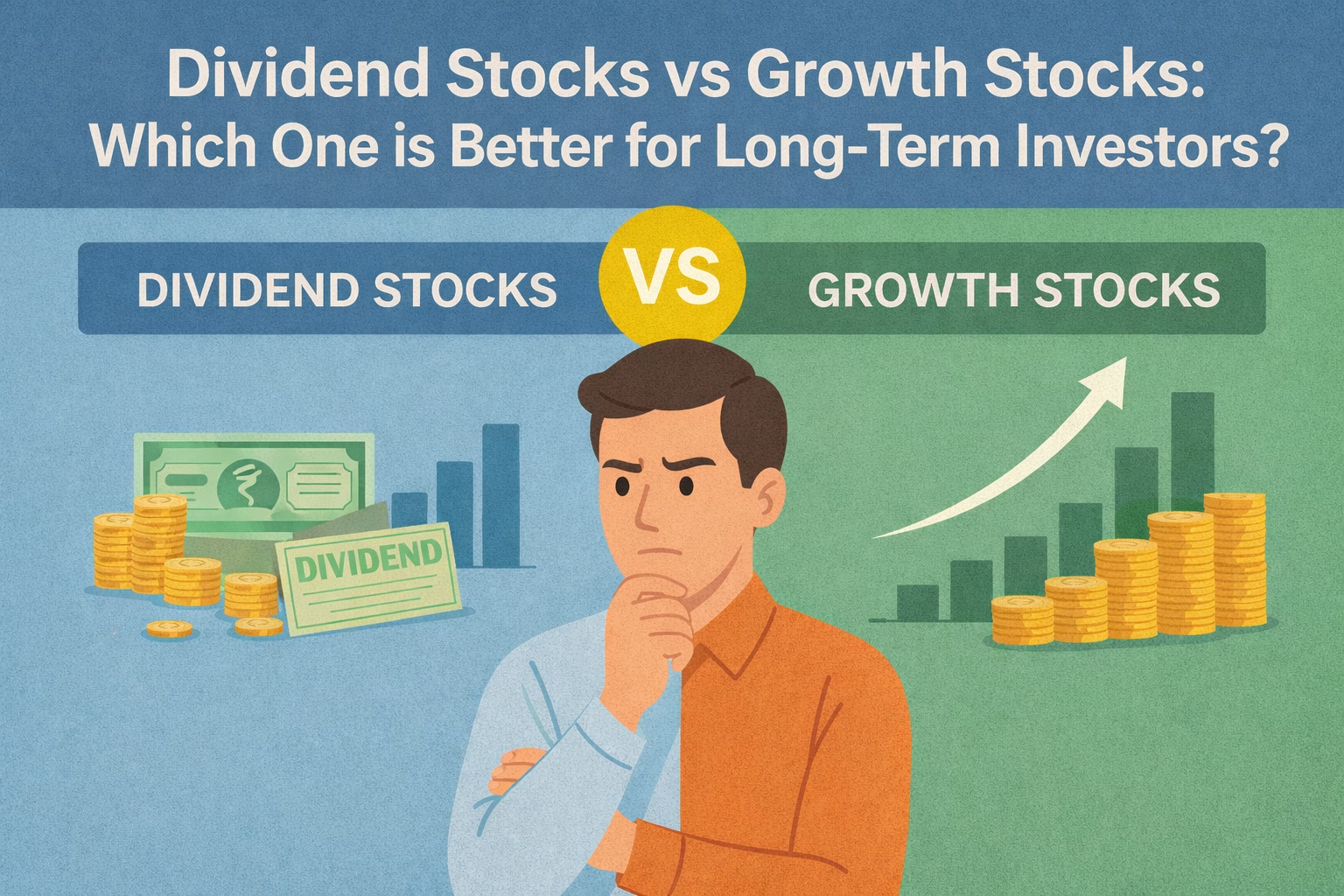
Introduction: A Classic Question Every Investor Faces
If you are planning to invest for the long term, one question will always come up: dividend stocks vs growth stocks — which one is better?
This debate has existed for decades and continues today because both options work well in different situations.
Many investors get confused when choosing between regular income and faster wealth creation. Understanding dividend stocks vs growth stocks properly can help you avoid mistakes, align investments with your goals, and build sustainable wealth over time.
This article explains dividend stocks vs growth stocks in simple terms, compares risks and returns, clears common myths, and helps you decide which strategy suits your long-term financial goals.
1. What Are Dividend Stocks? (Simple Explanation)
To understand dividend stocks vs growth stocks, let’s start with dividend stocks.
Dividend stocks are shares of companies that regularly share a part of their profits with investors. This payout is called a dividend and is usually paid quarterly, half-yearly, or yearly.
Common features of dividend stocks:
- Mature and stable companies
- Consistent cash flow
- Lower volatility
- Regular income for investors
Examples often include:
- FMCG companies
- Utility companies
- Banking & insurance firms
- Large, established businesses
Dividend stocks are popular among investors who prefer stability and income.
2. What Are Growth Stocks? (Simple Explanation)
Now let’s look at the other side of dividend stocks vs growth stocks.
Growth stocks are companies that reinvest their profits to expand faster instead of paying dividends. These companies focus on increasing revenue, launching new products, entering new markets, or improving technology.
Common features of growth stocks:
- Higher growth potential
- Higher risk and volatility
- Little or no dividends
- Strong long-term capital appreciation
Examples often include:
- Technology companies
- Startups that became listed companies
- Emerging sector leaders
Growth stocks appeal to investors who are willing to wait and tolerate short-term ups and downs.
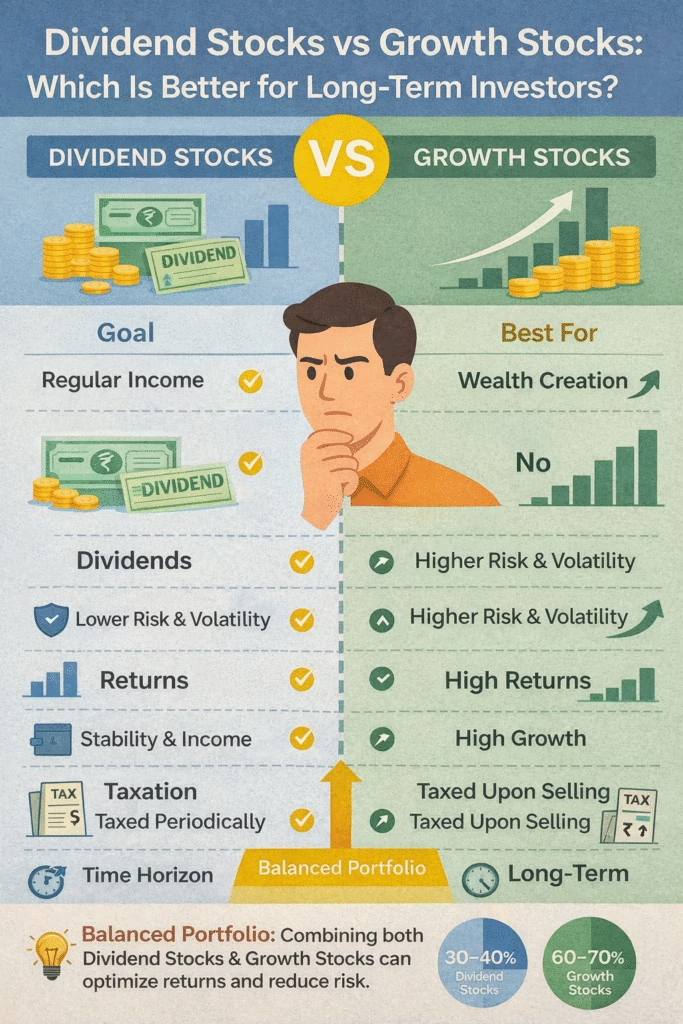
3. Core Difference: Dividend Stocks vs Growth Stocks
Understanding the basic difference between dividend stocks vs growth stocks makes decision-making easier.
| Factor | Dividend Stocks | Growth Stocks |
|---|---|---|
| Income | Regular dividends | No regular income |
| Risk | Lower | Higher |
| Volatility | Less | More |
| Best for | Stability & income | Wealth creation |
| Reinvestment | Investor decides | Company reinvests |
| Time Horizon | Medium to long | Long-term |
Both approaches can work — what matters is how you use them.
4. Why Long-Term Investors Care About Dividend Stocks vs Growth Stocks
Long-term investing is not about quick profits. It’s about:
- Beating inflation
- Creating passive income
- Compounding wealth
- Reducing financial stress
That’s why the question of dividend stocks vs growth stocks is so important.
Long-term investors usually want:
- Predictable returns
- Risk control
- Emotional comfort during market crashes
Dividend stocks offer peace of mind, while growth stocks offer higher potential rewards.
5. Power of Compounding: The Hidden Advantage
One key reason the debate of dividend stocks vs growth stocks never ends is compounding.
Dividend Compounding:
When you reinvest dividends:
- You buy more shares
- Those shares generate more dividends
- Over time, income grows exponentially
Growth Compounding:
Growth stocks compound by:
- Increasing earnings
- Increasing valuation
- Increasing share price
Both methods compound wealth — just in different ways.
RELATED: Best Tax-Saving Investments in India Before September 2025 Deadline
6. Risk Factor: Which Is Safer for Long-Term Investors?
Risk plays a huge role in dividend stocks vs growth stocks.
Dividend Stocks Risk:
- Slower growth
- Dividend cuts during extreme crises
- May underperform during bull markets
Growth Stocks Risk:
- Sharp price falls
- Overvaluation risk
- Business failure risk
During market crashes, dividend stocks usually fall less. Growth stocks often fall harder but recover faster in strong bull markets.
7. Income Needs: A Deciding Factor
Your income needs strongly influence the choice between dividend stocks vs growth stocks.
Choose dividend stocks if:
- You want regular cash flow
- You’re nearing retirement
- You want passive income
- You prefer stability
Choose growth stocks if:
- You don’t need income now
- You are young
- You want maximum long-term returns
- You can handle volatility
This is one of the simplest ways to decide between dividend stocks vs growth stocks.
8. Taxation: Often Ignored but Very Important
Tax rules also affect dividend stocks vs growth stocks returns.
Dividend Stocks:
- Dividends are taxed in the investor’s income slab
- Tax reduces net returns
Growth Stocks:
- Tax applies only when you sell
- Long-term capital gains tax is usually lower
- Tax deferral helps compounding
For many long-term investors, this tax efficiency makes growth stocks attractive in the dividend stocks vs growth stocks comparison.
9. Market Cycles: Which Performs Better When?
Understanding market cycles is essential when comparing dividend stocks vs growth stocks.
During Bull Markets:
- Growth stocks usually outperform
- Investors chase high returns
During Bear Markets:
- Dividend stocks protect capital better
- Stable cash flow helps reduce panic
Smart investors adjust allocation based on market conditions instead of choosing only one side in dividend stocks vs growth stocks.
10. Emotional Comfort: An Underrated Advantage
Investing isn’t just numbers — emotions matter.
Dividend investors:
- Feel rewarded even during sideways markets
- Are less likely to panic sell
Growth investors:
- Need strong emotional control
- Must tolerate sharp corrections
For many people, emotional stability decides the winner in dividend stocks vs growth stocks.
11. Myths Around Dividend Stocks vs Growth Stocks
Let’s clear some common myths.
❌ Myth 1: Dividend stocks are boring
✔ Reality: Dividend stocks can deliver strong long-term returns with lower stress.
❌ Myth 2: Growth stocks are always better
✔ Reality: Many growth stocks fail or remain overvalued for years.
❌ Myth 3: You must choose only one
✔ Reality: The best strategy often combines both dividend stocks vs growth stocks.
12. Portfolio Strategy: The Smart Middle Path
Experienced investors don’t fight the dividend stocks vs growth stocks debate — they balance it.
A simple long-term strategy:
- 60–70% growth stocks (wealth creation)
- 30–40% dividend stocks (stability & income)
This balance:
- Reduces volatility
- Improves consistency
- Provides income during downturns
13. Age-Based Allocation Strategy
Your age plays a major role in dividend stocks vs growth stocks.
In Your 20s & 30s:
- 70–80% growth stocks
- 20–30% dividend stocks
In Your 40s:
- 50–60% growth stocks
- 40–50% dividend stocks
In Your 50s & Beyond:
- 30–40% growth stocks
- 60–70% dividend stocks
This gradual shift reduces risk while preserving returns.
14. Real-Life Example
Let’s compare two investors over 20 years.
Investor A (Dividend Focus):
- Invests in dividend stocks
- Reinvests dividends
- Enjoys stable returns
Investor B (Growth Focus):
- Invests in growth stocks
- No income for years
- Higher final portfolio value
Both succeed — but their journey and stress levels differ. This perfectly explains dividend stocks vs growth stocks.
15. Which One Is Better for Long-Term Investors? (Final Answer)
So, dividend stocks vs growth stocks — which one is better for long-term investors?
The honest answer:
👉 Both are better — when used correctly.
- Dividend stocks provide stability, income, and emotional comfort
- Growth stocks deliver faster wealth creation
The best long-term investors don’t choose sides — they build a balanced portfolio using both dividend stocks vs growth stocks.
Conclusion: Build Wealth, Not Arguments
The debate of dividend stocks vs growth stocks will never end — and that’s a good thing. It reminds investors that there is no single perfect strategy.
Your goals, age, income needs, risk tolerance, and mindset decide the right mix. Focus on consistency, discipline, and patience rather than chasing one style.
In the long run, a balanced approach between dividend stocks vs growth stocks creates stronger, more reliable wealth.
FOLLOW US ON SOCIAL MEDIA TIME OF HINDUSTAN